
Overview
When it comes to smartphones, iPhone and Android users seem to live in different bubbles. Well, at least different-colored bubbles. When iPhone users send texts to fellow iPhone users, Apple’s flagship blue text message bubbles appear. But when sending to any other smartphone (e.g., Android devices), those bubbles appear green.
This color difference has become satirized in pop culture, with memes of iPhone users looking down on Android users when they see the green-bubbled texts. But does such an effect really exist? Do those green bubbles really cause iPhone users to turn up their nose and like the recipient less?
Normally, such questions would be the target of the National Enquirer, not the New England Journal of Medicine. But today, we’re firing up the scientific furnace for some tabloid fodder psychology. Let’s get to it.
The Experiment
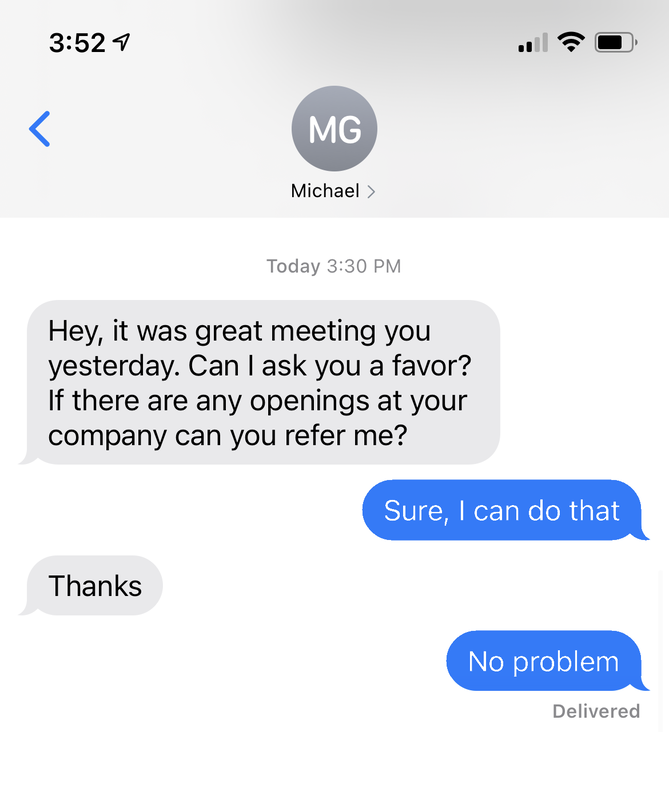
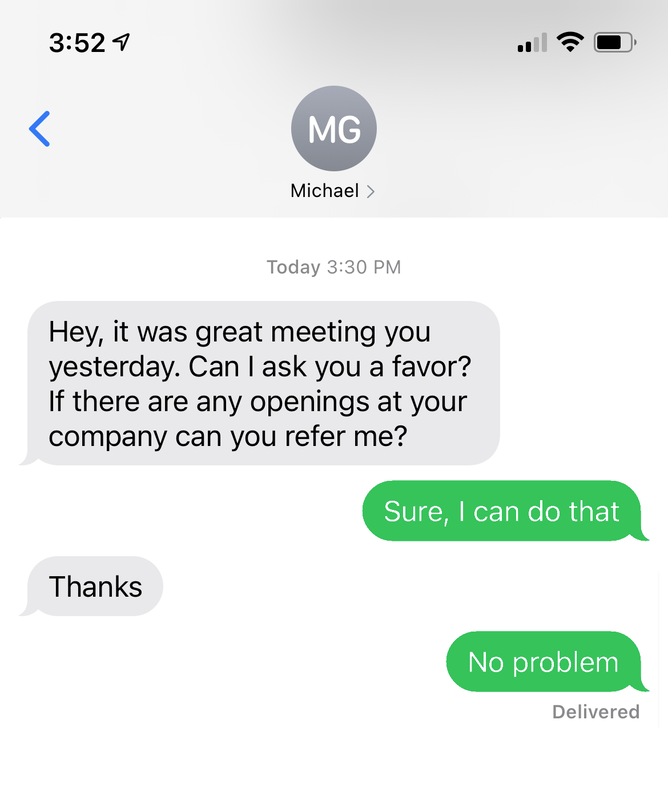
We designed an experiment with 400 people on Amazon Mechanical Turk in which participants were shown a screenshot of some text messages from a hypothetical acquaintance. We randomized whether the text messages sent in reply to that person were blue (i.e., the acquaintance has an iPhone) or green (i.e., the acquaintance likely has an Android phone).
Participants were instructed to “Imagine that yesterday you met a new acquaintance, Michael, while out with a group of co-workers. He just texted you the following from his [iPhone / Android phone].” Participants were shown one of the two images below, randomly assigned.
When it comes to smartphones, iPhone and Android users seem to live in different bubbles. Well, at least different-colored bubbles. When iPhone users send texts to fellow iPhone users, Apple’s flagship blue text message bubbles appear. But when sending to any other smartphone (e.g., Android devices), those bubbles appear green.
This color difference has become satirized in pop culture, with memes of iPhone users looking down on Android users when they see the green-bubbled texts. But does such an effect really exist? Do those green bubbles really cause iPhone users to turn up their nose and like the recipient less?
Normally, such questions would be the target of the National Enquirer, not the New England Journal of Medicine. But today, we’re firing up the scientific furnace for some tabloid fodder psychology. Let’s get to it.
The Experiment
We designed an experiment with 400 people on Amazon Mechanical Turk in which participants were shown a screenshot of some text messages from a hypothetical acquaintance. We randomized whether the text messages sent in reply to that person were blue (i.e., the acquaintance has an iPhone) or green (i.e., the acquaintance likely has an Android phone).
Participants were instructed to “Imagine that yesterday you met a new acquaintance, Michael, while out with a group of co-workers. He just texted you the following from his [iPhone / Android phone].” Participants were shown one of the two images below, randomly assigned.
|
|
Participants were then asked “How much do you like this person? (1 = Not at all, 7 = Extremely)” using a 1-7 scale.
Results
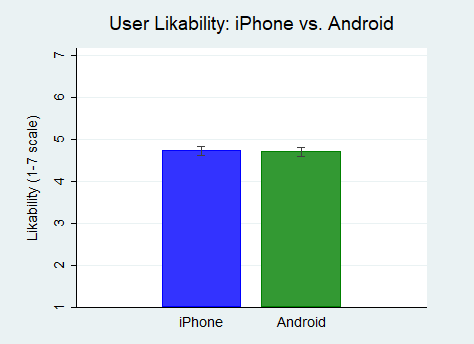
And for the grand reveal… there was no difference in likability between our iPhone user (avg. = 4.74) and our Android user (avg. = 4.72), (p = 0.886). Nor did we find any interactions between these results and participants’ gender (p = 0.770), age (p = 0.569), or real-life usage of either iPhone or Android devices (p = 0.903).
Conclusion
This time, it looks like pop culture was wrong. So, if you’re an Android user, and you ever get self-conscious about sending a text to an Apple aficionado, you can rest assured it really doesn’t matter.
But that's not to say that using certain types of tech can't elicit other perceptions. For our next experiment, we'll test whether using a Mac vs. PC can make the user seem more sophisticated.
Methods Note
We used an independent samples t-test to test for significant differences in perceptions between our two experimental conditions. For significant differences, the difference between the two groups' averages would be large and its corresponding “p-value” would be small. If the p-value is less than 0.05, we consider the difference statistically significant, meaning we'd likely find a similar effect if we ran the study again with this population. To test for significant interactions between the main results and participant demographics, we used OLS regression analyses with interaction terms.
Methods Note
We used an independent samples t-test to test for significant differences in perceptions between our two experimental conditions. For significant differences, the difference between the two groups' averages would be large and its corresponding “p-value” would be small. If the p-value is less than 0.05, we consider the difference statistically significant, meaning we'd likely find a similar effect if we ran the study again with this population. To test for significant interactions between the main results and participant demographics, we used OLS regression analyses with interaction terms.
Popular Experiments

COVID MasksDoes wearing a COVID mask affect how others think of you?
|

Video GamesAre video games more enjoyable than board games?
Does age or gender matter? |

Zero-Sum PoliticsDo Democrats or Republicans view society as win-lose?
|